Almost all insects suffer from some form of parasitic mite, but certain potter’s wasps have pockets on their bodies that seem to serve no purpose other than to carry around and protect the very mites that suck their blood.
When the wasp lays her eggs, the mites pour out of the “acarinaria” ( “acarinarium” = a place for keeping mites!) and enter the nest where they feed on the blood of her developing babies, but not enough to stunt or kill them.
It’s all worth it because there are tinier, parasitoid wasps that lay their eggs inside of young potter’s wasps, which obviously DOES kill them, but as soon as a parasitoid wasp breaks into the potter’s nest, the parasitic mites switch to an aggressive territorial mode and successfully drive off or kill the majority of invaders.
Here’s another one, this time a vertebrate! The great spotted cuckoo (Clamator glandarius) is one of those cuckoo species that doesn’t evict all its host’s chicks from the nest. In fact, it doesn’t mind sharing, but ultimately the cuckoo chick is bigger and beggier than its “siblings” and so gets the lion’s share of the meals. The overall health of its host’s chicks (usually corvids) suffers as a result.
So how does it help its host? Turns out that baby great spotted cuckoos fire a foul liquid from their cloacas as a defense against predators. In areas where predation is high, nests parasitized by cuckoos actually have a higher survival rate for everyone involved than unparasitized nests, thus making it better to have a parasite than not!
It’s a fine balancing act to be sure, since in the absence of predators it goes back to being detrimental to the hosts. But that’s another example of parasites helping their hosts.
I actually didn’t know this and I’m so glad to know that there is a changeling baby in nature that may murder a real baby but goes on to protect its adopted family by shitting at people
So I’m watching a Sir David Attenborough (Natural Curiousities on Netflix), to cope withe the crushing lonliness of solo housesitting, and he’s on about Really Weird animals and talks about the origins of the pheonix- a bird that people travelling though Africa only rarely saw shrouded in the streamy mists of volcanic soda lakes (which are literally boiling hot and also extremely caustic).
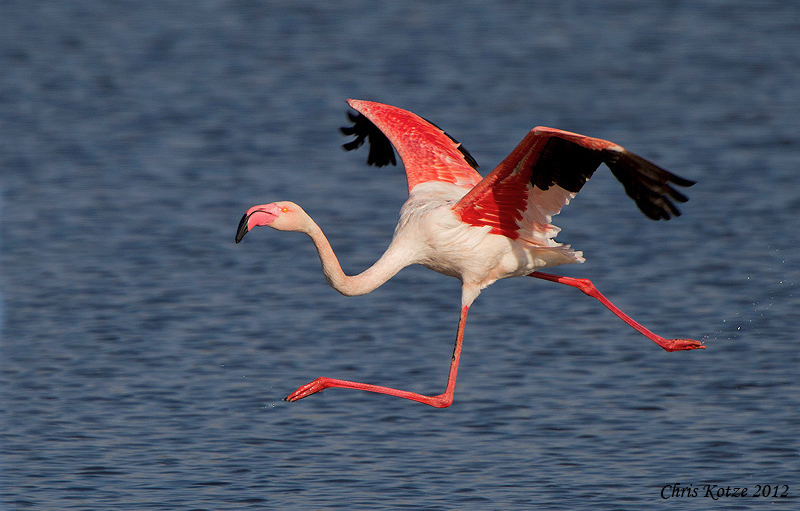
And all they’d see is the occasional bit of bright red plumage and see these things bobbing in and out of the horrible death clouds coming off the lake, and naturally came up with the myth of a firebird what the fuck ELSE would be living IN A GODDAMN VOLCANO??
The Central Africans told this to the Egyptians who told the Greeks* about this mysterious animal, and they ran hog-wild with it to create the now-famous Pheonix, but-
The bird they were seeing in those volcanic lakes?
*There is significant academic debate about who told who what when (esp as the firebird myth has cropped up multiple times and been culturally exchanged many, MANY times) but the Flamingo>Egyptian Bennu>Greek Pheonix>European Pheonix chain is fairly well agreed upon.
Some of my favorite tags so far:
@asleepinawell “Natural Curiousities” is on netflix and I think the PBS streaming app. BBC streaming keeps crashing on me but probably there too. It’s very much like his usual work, but with 500% more “Look at these funky specimens and the frantic scribbles of early scientific illustrators confronted with a fucking kangaroo” and “I’m Sir David Fucking Attenborough And I’m Going To Snuggle This Cheetah”
@heedra You are correct! According to Wikipedia: “The name “flamingo” comes from Portuguese or Spanish flamengo, “flame-colored”, in turn coming from Provençal flamenc from flama “flame” and Germanic-like suffix -ing, with a possible influence of words like “Fleming” THEY WERE TRYING TO TELL US ALL ALONG!
@melifair You’re in good company- I used to call them “Pimentos” until I was three and finally got the hang of the Letter “F”
Also, Apologies about the spelling. I have a reading disorder and it causes me to mis-read and by turn misspell certain words, especially ones with two nonidentical vowels in the middle of the word like Their and Becuase. Good thing we all know what I’m talking about anyway!
But how could you not tell us WHAT THE FLAMINGOS ARE DOING IN A VOLCANO?????
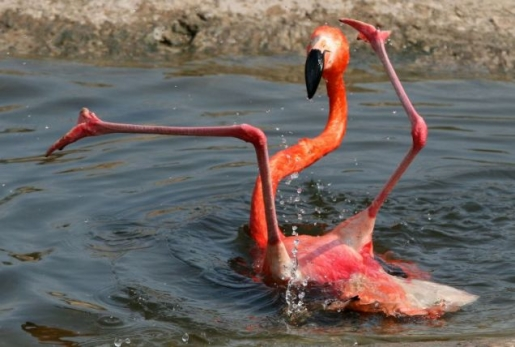
So Flamingoes are pretty badass.
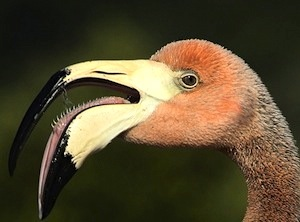
They’re hyperspecialized filter-feeders, not unlike krill-feeding whales, and thier heads are shaped Like That, so they can dangle thier heads in the water, suck up water full of algae and brine shrimp and other goodies, and filter them out with thier Spiny Tongues.
(Image Source Apparently, according to the Ancient Romans, Flamingo Tounge has a “Superb” flavor. You Wacky Roman Bastards)
But the lakes with the tastiest and most dense algae and arthropods are not Normal lakes. African Lesser Flamingoes (lesser becuase they have a smaller range, but probably our phoenix given how people were travelling at the time) like to hang out in extremely Alkaline Lakes where thier favorite algae grow, and those lakes are mostly in the volcanic Great Rift Valley. Where the lava and occasional venting of hot toxic gasses happen.
In addition to the wierd diet, and caustic water, Flamingoes can also cope with some pretty intense climate. The Alkaline Lakes Lesser Flamigoes like are also VERY HIGH in the mountains, where they cope with low oxygen, Intense UV radiation, and rapid and extreme temperature fluctuations- below freezing at night and heatstroke hot in the day.
You can tell how well a Flamigo is Flamingoing by it’s color! The lovely red-pink color comes from the algae and arthopods they eat: the better-fed and healthier a flamingo is, the more intense thier colors will be! Zoo famingoes can thrive on a wide variety of diets, but thier colors will fade, and it will cause everyone to lose romantic interest, so they have to be fed a special color-intensive diet to keep breeding programs going.
So while Flamingoes probably weren’t the bird you were picturing when you thought of a Phoenix , they’re Pretty Badass and worthy of the mythic lore.
This is priceless. Fur is a great nest-building material. Normally, birds get it from snags on branches or (maybe, I’m not sure) dead animals. I know some people who actually put out a bird-feeder full of hair for the birds after they brush out their dog, specifically so that it can be turned into nesting material.
This is a very brave birb who has learned where it comes from and just decided to go get some from the source, and a dog who is probably too asleep to care.




 This Is a Backup Blog