i was at the zoo and just kind of vagueing out leaning on a rail and watching the duck pond and in the background a kid started yelling “he’s coming for you! he’s coming for you!!” and i thought it was some game she was playing with her family or something up until i felt a little hand grab my elbow and looked down to see this tiny wide-eyed child staring up at me with the world’s most serious expression and she said in a solemn voice
“he’s here for you”
and something reached out and grabbed my other hand
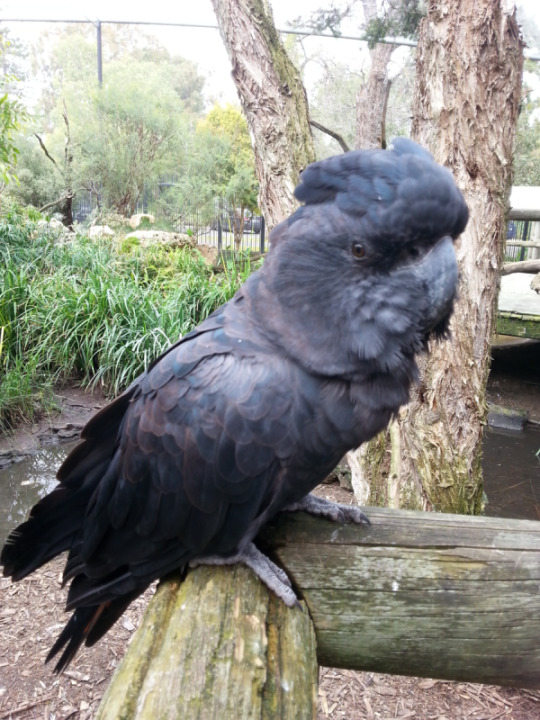
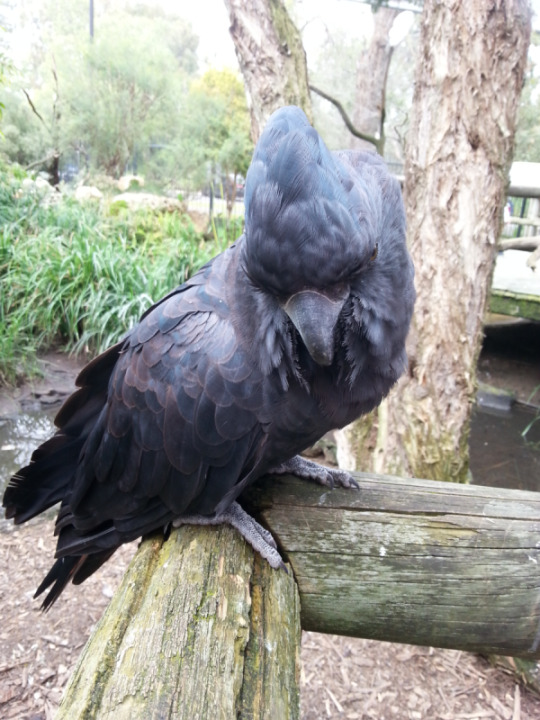
it turns out that a resident cockatoo has figured out that if it just waddles back and forth along the rail it can get the maximum amount of attention and headskritches with the minimum amount of flying and objectively this is very cute but at the same time this was very nearly the way that a grown adult died of a heart attack at the zoo
I’m seeing some confusion about this one in the reblogs, and it is for my money one of the most interesting things to know about birds, so:
The big guy in this picture is the cuckoo – a young cuckoo. The little one is the momma bird, who is feeding the baby, even though the baby is now like five times as big as she is. That’s because the cuckoo is a brood parasite.
Cuckoos lay their eggs in the nests of other birds. If the hosts notice the cuckoo egg, they will try to get rid of it – if they don’t, though, and the cuckoo chick hatches, they will raise it as their own, even though the first thing it does when it hatches is to murder all of their other children.
The question with this is always: why, at that point, do the host birds raise the cuckoo chick? It’s way too hungry, it’s way too aggressive, it hangs around way longer than a normal chick would, and it’s huge, for god’s sake. It’s obviously not theirs. There are a couple of theories. One is that the begging call a baby cuckoo makes sounds like an entire nest of normal chicks, and the parents are programmed to feed whatever makes that noise. I got some doubts about behavior models that are that deterministic, though. I like to think it’s some avian variation on the sunk cost fallacy – the parents put all these resources into making this nest and laying this clutch, and by god they’re going to get a baby out of it, even if it’s a giant monster baby.
There is absolutely zero science behind this but my impression has always been that the parasitized parents, upon raising a gargantuan monster child, are basically just thrilled to pieces, like, “fuck yeah my huge Gundam kid can beat up your honor student” and “gaze upon my feathered monster truck pride and joy and despair”.







 This Is a Backup Blog