I was reading this fanfiction on AO3 of a crossover between Naruto and SW, when I started thinking about the character traits of TPM Anakin from an Eastern Perspective.
And it hit me, Little Ani was a perfectly goodkid in TPM. Hell, if the kid had been presented in front of a cache of martial artists in Asia, they’d be fighting each other to get him under their wing, instead of uttering words of foreboding, telling everyone who would listen that this kid is dangerous.
Anakin’s fear and worry for his mother would not have been perceived as signs of darkness but as the wonderful trait of filial piety. In fact, had he been calm and detached the whole time, had he been able to just shrug off the immense feeling of loss at leaving his mother like that, the martial artists would’ve been far more worried and probably would think Anakin to heartless and cold. There’s a common belief that if you could forget your own birth mother so easily, you wouldn’t have much loyalty to your adopted family of warriors either. They would’ve helped the kid in freeing his mother and encouraged him to visit whenever there’s off-time or vacation because most martial artists would recognize the difference between unhealthy, baseless fear and understandable worry for an actual problem that needed to be resolved.
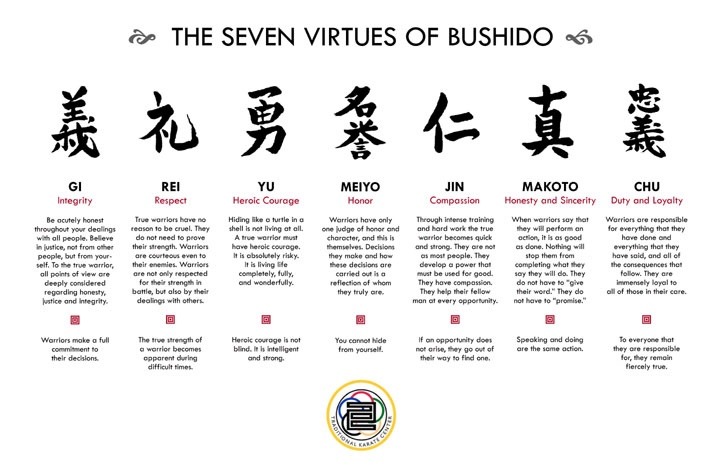
And then there are the other traits, behold the 7 virtues of Bushido, which is a general list of traits and standards that one should uphold to be considered a good human being. Little Ani practically displayed all of these character traits during the events of TPM. Sure, he had anger issues, but the kid’s only nine, there’s still time to help him work through it and teach him how to handle these powers. Another common belief amongst the Chinese: If the student’s already perfect in everything but skillset, what use do you have for a master?
Any martial arts faction would’ve been proud to induct Anakin as an initiate and the master that gets him would be counting his lucky stars for being able to have an apprentice like this. If you see a kid like this in any Wuxia genre story, people would be falling over themselves to praise and befriend him. And yet, the space cult monks only see his darkness. Seriously??!
Bottom Line: Anakin Skywalker was a great kid, perfect af martial artist material but the space cults ruined him. The poor kid would have done so much better as a wandering swordsman or samurai.
FIGHT ME ON THIS, I DARE YOU.
Wow. This is awesome. Now I need an AU where Baze and Chirrut show up to recruit “rejected” order candidates. “Oh, too old for the Order then? All is as the Force wills it. Baze will go invite your mother to join too and we can all go home together.”
“Excuse me, this is our council chamber and we are in the middle of evaluating this candidate,” Mace says. “Did Qui-Gon let you in?”
“Sounds like you’ve already made a decision about him before your meeting began,” Baze remarks. “And just what is so wrong about missing and fearing for his mother that you just left in slavery?” He asks coming to stand by Anakin.
“Slavery is an affront to the Force. To do nothing in the face if its evil is to invite darkness,” Chirrut proclaims leaning on his staff.
“Are you Jedi too?” Anakin asks with growing hope, a warmth filling him where before he was cold down to his bones. “Will you–will you really free my mother?”
That sounds like an excellent idea for an AU, Chirrut and Baze taking Anakin back to the temple in Jedha would have saved everyone a lot of pain. I would love to read more of this.
So Chirrut and Baze adopt Anakin (none of this master stuff). Anakin insists they help Padme’s Queen so they decide to tag along with Qui-Gon and Obi-Wan.
(”Master, why are they here?” Obi-Wan asks in a hissing voice.
“The Force wills it,” Chirrut answers from the other side of the room.
“Anakin wants to help his friends and help people suffering. That’s a good thing,” Baze adds pointedly.)
Baze has a whole lot to say about sending the Gungans in as cannon fodder. Chirrut lets the tooka out of the bag that Padme is the Queen while en route (it’s not like he can see her “cunning disguise” after all). Padme is happy to learn about the Guardians and wants to develop deeper ties with them after she liberates her planet. Anakin still ends up flying in the battle and destroying the ship. Chirrut helps out with Darth Maul in his usual way, waiting and following behind the fight until the Force prompts him to act, saving Qui-Gon’s life and knocking Darth Maul out (he and Baze decide to take the Sith back with them to Jeddah. Baze does not like the idea of leaving Maul to be interrogated under this new Supreme Chancellor, especially when Chirrut positively recoils from the man). Qui-Gon keeps trying to get Anakin to consider joining the Order.
(”But … the council doesn’t want me,” Anakin reminds him carefully. “I’m too old.”
“I can still train you without their approval,” Qui-Gon insists.
“But you have Obi-Wan, who is AMAZING. I saw the footage from the saber fight with the Sith. He’s your student. Plus, if I go with Baze and Chirrut I get to free my mom just like in my dream.”)
Palpatine is NOT happy that he will be losing access to the Chosen One but is he really that necessary to his plans? No, he just wanted to corrupt him to really stick it to the Jedi Order when he orchestrates their downfall. He can always go to that backwater planet later and pick the boy up if he needs him. Really, like a bunch of crystal worshipers with no Force talent will be any threat to him. Anakin says goodbye to the Jedi Order and to Padme (they’ve exchanged comm info. Anakin plans to write her soon) and they rescue his mom (who’s own Force abilities are more than welcomed by the Guardians) and go to Jeddah.
Other than still dealing with copious amounts of sand, Anakin is quiet happy in his new life.
Stark Tower has literally got the best wifi in the whole of New York and Tony makes it free as well so sometimes he’ll walk out of the ground floor and just see like a dozen or so people, usually kids, just sat on the doorstep on their phones or laptops and like it’s such a little thing to do but yknow. He’s Ironman. Give the kids some damn fast wifi.
okay BUT
the day after actual tony stark saw them hanging out in frony of the Tower, some of the kids were reluctant to go back there but God they had to finish their homework and the tower was on their way from school so they go back there and
theres a separate room that surely mustve been some important part of the lobby yesterday but now had a “Free WiFi Zone” plate on the door. Inside were huge sofas and armchairs and beanbags, fridges stocked with various drinks, a coffee maker and 20ish iron man mugs, a couple of laptops on the desk near the wall and a note for them to read:
“This is your part of the Tower now. Use whatever you need, no time limit, and stay in school kids 🙂 – T. S.”
So I uh… went to write a short, cute drabble for this and… I ended up writing a nearly 3k long fic? Whoops? This got away from me. I regret nothing.
It started with Wi-fi. Wi-fi of all things. Tony found out by accident.
“What’s going on out here?” Tony asked, sliding his sunglasses down a bit to look at the group of teenagers sitting in front of the Tower.
All the teens looked up at once, eyes wide like deer caught in headlights. They looked at each other, then back at Tony.
“Um, well…” A brunet spoke up, closing his laptop. “The Avengers Tower has great Wi-fi, sir. And it’s free. We all… some of us don’t have access to Wi-fi at home, and we need it for school projects.”
Tony blinked. “Oh. Okay. Study hard, then.” He adjusted his sunglasses again and walked into the Tower without a second thought.
But later that day, Tony keeps thinking about it. Can’t get it out of his head, until he goes so far to have FRIDAY pull up security camera footage from in front of the Tower over the past few weeks.
There are kids there, always, Tony finds. Anywhere from ten to nearly fifty, all crowded around the Tower, sitting on the grass. Even at night or in shitty weather, there were at least a few.
And sure, Tony was fine with it. More than fine with it, even. If kids wanted to use Tony’s Wi-fi, he on board with it. Tony was completely with the idea of accessible technology.
So it hung out in the back of Tony’s mind, and he smiled at the group of the teens he saw every time he walked in and it the Tower. He made sure security didn’t bother them, and left them to their devices.
But the thoughts of it wouldn’t leave Tony’s brain. A part of him ached a little at the idea of the kids who were so needing of a damned Wi-fi connection they would sit in the rain for it. It got to the point that Tony was lying awake in bed, thinking about it.
“FRIDAY, are there any vacant floors in the Tower?” Tony asked, staring at the ceiling.
“There are three vacant floors,” FRIDAY answered in a chipper voice.
Tony sat up. “FRIDAY, order a shit ton of junk food and furniture. We have work to do.”
And so it began. Within a week, Tony had a large room on its own floor completely dedicated to being an expansive lounge. It had all sorts of furniture, shelves stocked with every food Tony could think of, a fridge full of drinks, an espresso machine, and over a dozen outlets. It was close to the bottom floor, easily accessible by the elevator. Tony talked to Happy and reorganized his entire security so that anyone could walk into the Tower and go straight to the lounge.
The first day, there were already over twenty teens milling around, laptops plugged in and noses in books. It made Tony smile and feel warm in ways he couldn’t describe, seeing the tranquil environment of kids studying. The numbers grew over time, and Tony made sure it was kept accessible 24/7.
So it started with Wi-fi. But after that, things got more… complicated.
Tony was in the lounge, taking an inventory of what needed to be restocked. Sure, he had people for that, but it was nice to show his face every so often, remind the kids he existed.
Tony finished writing down how many bags of Doritos were on the shelf and spun around, crashing right into someone.
“Oh fuck,” Tony stumbled, catching the person by their elbows. A pair of startled green eyes stared up at him in horror. “Hey. Hi.” Tony smiled. “Sorry about that. Wasn’t looking where I was going. My fault.”
The girl stared at him, breathing hard. “I’m sorry I didn’t-”
“Hey, no. My fault, remember?” Tony soothed. “I’m responsible for at least fifty per cent of the accidents in this Tower.”
“Actually, you’re responsible for sixty-seven point nine per cent.” FRIDAY chirped.
Tony frowned. “Is that counting the incident on Thursday?”
“You did hold fifty per cent of the blame.” FRIDAY reminded him.
“Twelve per cent, at most,” Tony argued. He looked back at the girl. “Thor tried to put a raw egg in the toaster, it’s a long story.”
The girl gave a confused, shy smile. Tony counted that as some kind of victory.
Tony went to let go of the girl’s elbows when his gaze brushed over her forearm. “Hey.” Tony’s voice was softer. “Are you okay?”
The girl froze again, biting her lip. “No- it’s fine, I don’t-” Her face turned red. But not as red as the angry lines cut into her wrist.
“You wanna talk?” Tony asked, eyebrows knit together.
“You-you’re busy I shouldn’t-”
“FRIDAY, cancel the afternoon meeting. Or tell them I’m not coming,” Tony said without hesitation. “There, I’m free.”
The girl frowned. “You didn’t have to do that. It’s fine, really.”
Tony rolled his eyes. “Come on, kid. Let’s talk, okay?” He sighed at her hesitance. “Hey, what’s the worst I can do? I’m just some rich guy.”
With a begrudging smile, the girl took Tony’s hand and Tony lead them to an empty storage room, sitting on the floor with his back against the wall.
“What’s your name?” Tony asked.
“Cecilia,” The girl mumbled.
“Hi, I’m Tony.” Tony introduced with a bright smile. Cecilia laughed. “So you wanna talk about this?” He pointed to her wrist.
“I…” Cecilia cleared her throat. “It’s hard, you know? School is hard, and I’m not good enough to do anything right, and…” She swallowed. Cecilia covered her face, choking on a sob.
Tony scooted closer, wrapping an arm around her shoulders. “You wanna know something, kid?”
Cecilia looked up.
“I am one of the richest men alive, have been named Sexiest Man Alive three times, have my last name attached to a fortune five hundred company, have been called one of the leading minds of the 21st century, am a member of the goddamned Avengers and…” Tony ran a hand through his hair. “And I feel the same way. All the time. I wake up worried that someday everyone’s gonna see through me, see the fraud I really am.” Tony cleared his throat. “I have anxiety attacks. I wake up screaming from nightmares. I avoid mirrors. And some days I don’t want to wake up at all.
“But I do. Because there are people who need me to. And maybe it’s more for me than you. But it’s not about numbers. Quantity holds no value the quality. As long as there’s one person who cares, you’ve got a reason to wake up in the morning.” Tony thought a moment. “And if you’ve got no one else, then I count, right?”
There was a long stretch of awkward silence, but the shy smile Tony got made it all worth it.
After that, Tony invested in having free, confidential, no strings attached therapists at the Tower for the kids who came to study. He started with five, but by the end of the month, Tony had seven full time and three part-time working at the Tower. Tony did briefly see Cecilia’s face every now and then, and she seemed happier. That made it all worth it.
After that, everything was a downward spiral. Someone put a suggestion box on the door, and the teens who stayed wrote their ideas down. Tony read every single one. Even the stupid ones. And he listened.
First, there were showers installed in the bathrooms. Tony noticed there were certain faces that showed up more than others, so often it was almost concerning. So Tony figured they might as well freshen up while there. The showers were equipped with towels, soap, and all other necessities.
After the showers came the storage room filled with other living supplies. Blankets, food items, clothing, some basic tech, gift cards for local supermarkets, toiletries. Anything Tony could think of required for living. Like everything else, anyone could take anything, no questions asked.
Then came the library. There were suggestions for a supply of the review books and textbooks for the classes students were taking, and Tony decided to go in all or nothing. The library was filled wall to wall with every modern textbook and review book in the curriculum, as well as an expansive amount of leisure reads as well. Tony stocked it with comfortable seating, computers and tablets as well. There were no late fees, Tony refused to make any of the kids pay a damned dime for things they should have basic access to.
And then there were physical doctors as well. Ones who could give flu shots and prescribe at least the most basic of medications and advice.
After that, the gym just seemed to be common sense. As the recommendations in the box pointed out, public gyms were expensive. So Tony set up a gym. Granted it wasn’t Avengers level, but it was a damned nice gym.
Tutors came next. Private tutors, as well as ones that would teach entire groups. Tony managed to wrestle with the local schools to even get the kids credit for some of the tutorings.
After that, things finally seemed to mellow out. Tony drew up a list of rules, but most of the teens were pretty decent about keeping things civil. Tony was damned proud to average only one incident a month.
The Avengers found out about the Student’s Lounge as it’d be dubbed, and they frequented it more than Tony expected. He found Clint down there telling stories that were probably classified, Natasha showing a group of girls ballet moves, Thor showing off trinkets from Asgard, Steve drawing with a group of art kids, Sam giving serious talks on mental health, and so on. It was nice.
And it worked. Kids were happy and studying, but also had a place to relax and unwind. Tony did have to get an ungodly number of permits and licenses to do what he did, but it was all beyond worth it to see the kids smiling and being safe.
It was a year later when Tony was working in his workshop with jeans and a tank top and FRIDAY caught his attention.
“Mr Stark, your presence has been requested in the Student’s Lounge,” FRIDAY said, cutting into the silence.
Tony frowned. “Is it an emergency?”
There was a pause. “No, but the students are rather insistent.”
“Fine.” Tony stood up with a sigh. “Tell them I’ll be down there in a minute.”
Tony took the elevator down to the floor that was now entirely monopolized by the Student’s Lounge. As soon as the doors opened he found himself standing in front of a few dozen teens, all crowded around and waiting.
“Is this some club meeting or a cult initiation?” Tony asked, sliding his grease-covered hands into his pockets.
A teen stepped forward, a blond boy with bright eyes and a nervous smile. “Uh, hi. We… we had something we wanted to share with you.” He was holding note cards, absently tapping them.
Tony glanced around. “Well then, shoot.” He spread his hands.
The blond cleared his throat, looking down at the cards. “We hear the saying a lot,” He read, “that it’s impossible to shop for a man who has everything. And with you, that couldn’t be more true. A genius billionaire playboy philanthropist, one of Earth’s Mightiest Heroes, and an amazing person all around. You truly have everything, Mister Stark.
“And yet, you give. You give, and you give. You gave us a place to study that became so much more. Beyond the material items, this place has become a home for all of us. For those of us who don’t have food to eat at home, books to read, clothes to wear, a family to come home to. All because you wanted to give some kids a good Wi-fi connection. You created a family. This year alone, the graduation rate grew ten per cent from last year, and we don’t think it’s a coincidence. And we’re all confident with your help, that number will grow more and more.
“You created jobs for the community. We did the math and figured at least fifty new jobs were created through the Student’s Lounge. And you pay for all of it out of pocket. You don’t need to. You’ve already saved the world more than enough times, given millions of dollars to charity. And yet you did this for a group of kids sitting on your front lawn just to get a decent Wi-fi connection.
“There are no words to describe the kindness that takes. The amount of time you’ve put towards this proves it’s so much more than a publicity stunt. Not only do you personally oversee everything, but you stop by weekly, even if just to say hi. You listen to what we have to say. In a world that makes it so easy to ignore teenagers, you put every ounce of effort into doing the complete opposite. And your effort didn’t go unnoticed.” The blond stepped aside and let a redhead girl stand in the middle instead.
“My name is Miranda.” The girl spoke up. “A year ago, I was addicted to heroin and struggling in all of my classes. I was… I was ready to drop out of school altogether, even considered selling my own body just for drug money. But a friend dragged me here and… and I got therapy. A doctor. Food. All things my family struggled to afford. My recovery is still slow going, but thanks to you, I can say I’m in recovery, to begin with. Thank you.” Miranda stepped to the side and a black haired boy took her place.
“I’m Ian. My parents abused me, and I had nowhere to go. Even after coming here to spend my afternoons, I was hesitant to overstay my welcome. But I wasn’t ever judged, and always felt safe here. I was able to work up enough courage to run away and start spending nights here. Eventually, I met a friend here who let me stay with them, but not once did I have to know how it felt to be homeless. This place was my home, the entire time, even now that I sleep somewhere else. You gave me a home. Thank you.”
And so it went on, each kid telling their own version, and Tony wasn’t even ashamed to admit he was openly crying before they even got through ten. And he listened. To every single one. Tried to remember names and important details, make mental notes for future reference. Tony watched and listened, entranced by every story.
The first boy stepped back up. “And I’m Ben. I don’t really have a sob story, but I do know that this place is a home for every single person here. We’re a family of brothers and sisters, and you’re, for lack of better wording, the cool dad. So thank you. From the bottom of our hearts, thank you. So much. We hope our family can grow, and this home will only get better with each day. So while we don’t have any gift, we hope this can stand as one. Our stories are something that you gave us, and we hope by sharing them you can understand how much you mean to all of us.” The boy, Ben, lowered his notecards and smiled. “Thank you.”
Tony stared at them, wiping tears away from his eyes. “You’re all assholes.” He decided. “I am supposed to be a suave billionaire, and here you’ve got me crying like a dumbass.”
The teens all laughed.
“You know what?” Tony clapped his hands together. “This deserves a pizza party. Domino’s is about to hate me. Does anyone have any dietary restrictions? Start writing up a list while I find a phone number.”
“Don’t you have stuff to do?” A brunette girl who Tony remembered to be Cassie asked.
Tony shrugged. “It’s fine, I’ll do it in the morning.”
“Miss Potts has asked for the schematics to be uploaded by midnight,” FRIDAY spoke up.
“Pepper has been working for me long enough to know ‘by midnight’ means by noon the next day. It’s fine.” Tony waved off. “Come on, start writing a list. If I don’t see at least one gluten-free pizza, I’m making you do it again.”
The teens all smiled and started writing and shouting at each other. Tony watched with a happy sigh. They were a family.
And all these people call in, sharing their own memories of this mysterious Cryptid named Logan who is apparently an immortal, grumpy, wandering dad-friend who’s also a patriot and he helped punch out Nazi’s and free camps and beats up assholes who don’t respect women. And the whole while Logan is watching this from a TV screen with Kitty or Rogue holding his hand so gently, after they dragged him to the couch in a hurry. “You recording this?” “Don’t worry, we won’t let you miss a single word.”
Okay but if we’re gonna do this we’re gonna do this HARDCORE HISTORIAN STYLE, and it initially comes up while Steve is being interviewed for a book about the Howling Commandos or a bit for the History Channel or something. Because this person is like “Hey, there are a bunch of stories of you showing up somewhere with only one dude for backup, was that Bucky?” And we’ll assume that this is before the whole Winter Soldier thing, so that’s not a hideously loaded question.
And Steve kind of laughs and he’s like, “Oh, wow, God, that was actually this dude on detached duty from the Canadian special forces, he and I got sent on a bunch of missions together. His name was Logan, he was the weirdest guy I ever met, and I knew some pretty weird guys, but he could take a hit even better than I could, so when the Howlies were laid up, they sent us out together.” And he launches into this story about how one time he and Logan stole a plane complete with pilot and stormed a prison camp that was holding German Jews before sending them up to Poland, and the historian he’s talking to is taking frantic notes and trying not to drool because THIS IS A NEW GUY. CAPTAIN AMERICA’S STORY IS METICULOUSLY WELL DOCUMENTED BUT NO ONE’S EVER MENTIONED THIS GUY.
There are no pictures, obviously, so Steve does a sketch for this historian, because he’s helpful like that and also because. Like. Listen. Steve’s been through a lot of weird shit, and to be sure this Logan he used to know could take a bullet and keep coming no problem, but this dude’s probably been dead fifty or sixty years. No harm in giving him a little posthumous glory, right?
So this historian runs back to her university and starts doing research on the Internet. She reaches out to her coworkers first, then to anyone else she knows, then to the premier WWII and Captain America scholars of the world, and asks all of them “Do you happen to know who the fuck this dude is?”
And like, no, they don’t. They’ve got no idea. Steve’s not even totally sure what the guy’s real last name was, because Jameson is common as hell and there’s no Logan Jameson on the books. So they start doing research into this WWII cryptid, and finally they reach an old woman who listens to her grandson’s boyfriend talk passionately about this new project he’s working on and goes “Oh, yeah, I met Cap in Germany one time, there was a guy with him who sounds kind of like what you’re talking about.”
This passionate history major immediately sends an email in all caps to his adviser and it just says “MY BOYFRIEND’S GRANNY KNOWS WHO WE’RE TALKING ABOUT PLEASE COME TO KANSAS ASAP THANKS” or whatever, because, listen, historians are Like That. Speaking as someone who could easily have claimed to be a history major based on my thesis, I would have gone to Kansas in 0.2 seconds if someone had been like “What’s up we found that book you were after but we can’t take it out of the museum.” It does stuff to you. Trust me here.
So this woman tells the story of how Cap and his weird buddy broke her and her mother and father out of a temporary prison camp, and this history professor immediately takes all the tiny bits of information and starts asking around, looking for literally anyone else who knows this Logan dude. He saved your ass one time in Paris? He gave you some rations in Berlin? He beat your grandfather’s ass in Russia? He took three bullets for you? You had a passing conversation? This historian and his extremely pumped undergrad who just changed his senior thesis want to hear about it.
And then someone gets in touch with them and is like “Hey, I know you’re looking for WWII stories, but this guy saved my dad’s entire unit on the Somme and I have pictures?” And someone else is like “Hey, I have a file from a Vietnam MASH unit for a Logan who looks like that guy, do you want it?” And someone else is like “Uh, fuck all of y’all, I think this is him in the Civil War, what do I do about that?”
AND SO BEGINS LOGAN, THE HISTORICAL CRYPTID.
This undergrad is taking an extra year of college and basically getting a Bachelor’s degree in Tracking Weird Mutants Through History, and also his adviser is very lucky to be on tenure, because otherwise he would have been laughed out of the college three times by now. But there is an absolute preponderance of evidence, is the thing, so it just turns into this massive quest to investigate exactly whether or not Logan the Mystery Dude was actually in China for the Boxer Rebellion or whatever.
Forget this being a collaborative effort between colleges, there are multiple continents involved in this by now. Canadian government is under pressure to turn out their WWII special operations files for this guy from five different big name universities in five different countries, including their own. Things are getting a little wild in academia. Steve’s been interviewed nine times and he has a filter set up in his email specifically to catch stuff from the University of Toronto.
It takes a little bit for Kitty’s bubbe to get a phone call. Kitty’s bubbe has been living a quiet-ass life in Illinois and likes it that way, especially because her last name is not Pryde and therefore Kitty and her weird friends can crash at Bubbe’s house whenever they’re in the area without any trouble. It’s fine if her granddaughter wants to run around in spandex and save the world and shit, she’s honestly much more chill about it than Kitty’s parents, but Bubbe does not care for news crews in her neighborhood thank you very much.
But so eventually this nice old Ashkenazi woman gets a phone call from an extremely pumped undergrad who read a very brief statement she gave in a news article forty years ago about Captain America, who she is very grateful to for breaking her, her older sister, and their little brother out of a prison camp during WWII and also helping them get across the border. Did she happen to see anyone else? Why yes, very polite young man, the Captain had another man with him, he was very grumpy but he let my brother ride on his shoulders so I liked him very much. That’s great, would she mind if someone came and talked to her about that? No, very polite young man, not at all, when would work for you?
And she gives Kitty a call that night, because she gives Kitty a weekly call since Kitty and her parents are going through a rough spot to the tune of “please God stop risking your life//listen I’m saving people I’m not going to stop learn to cope”. Bubbe mentions offhand that she’s going to have a talk with this very polite young historian about the Shoah and Kitty’s understandably a little concerned for her bubbe’s mental health, and asks some questions.
So Kitty hears her bubbe out in increasing degrees of shock, hangs up the phone, and immediately goes and does an extensive google.
Then she goes and hammers on Logan’s door until he says to come in, slams her computer down in front of him, and says “Holy shit, Logan, why didn’t you tell us that you knew Captain America?”
“Uh, because I mostly didn’t,” Logan says, wary. “Don’t remember that much.”
“You might want to take a look at this, then,” Kitty says, and Logan looks through her fifteen tabs and thanks her and calls the university that seems best informed.
Which is the story of how an extremely pumped undergrad gets a phone call from the object of his thesis that opens with “This is gonna sound pretty fuckin’ wild, but my name is Logan and I’m pretty sure you can catch me up on the last hundred years better than I can.”
Oh, and then Logan and Steve meet up again and it’s very nice and sweet and that undergrad gets a full ride to the PhD program of his choice. The full ride’s name is actually Tony Stark, who’s doing a favor for Steve, who’s doing a favor for Logan, who’s secretly doing a favor for the undergrad, but no one really knows that.
Let’s talk about how, when the war ends, when the Pevensie children go back to London, Susan sees a young woman standing at the train platform, weeping, waving.
First, Susan thinks civilian; and second, she thinks not much older than me.
Third, Susan thinks Mother.
They surge off the train, into their parents’ arms, laughing, embracing. Around them, the train platform is full of reunions (in her life, trains will give so much to Susan, and take so much away).
Over her mother’s shoulders, Susan sees Peter step solemnly back from his father so that Edmund can swoop in to get his hair paternally ruffled. She meets Peter’s eyes across the space, the way they saw each other over battlefields and tents full of the wounded, in negotiations and formal envoys.
She has always seen Peter when others only saw the king, only duty embodied in a young man’s slight, noble features. Susan can see him now, the way he looks at their father. Once, parents had meant protection, authority, solidity. But Peter’s shoulders are slender, are steady, will be weighed down every moment of the rest of his life. She can see it in him, the unreasonable hopes he had that as mighty a figure as a father might take some of that weight from him.
Their father has one hand on Lucy’s round cheek and he is weeping, for all he is pretending not to. He’s a good man, a portly one, thinner than when they left, but Susan can see the loss in the slope of Peter’s shoulders. This good man cannot lighten the king’s load; he only adds one more responsibility to the towering pile. Susan crosses the space to take Peter’s hand. He inhales and straightens his spine.
“You’ve all grown so much,” their mother says.
Edmund is too young to register, but older now than he was at his first war; Lucy, who had been so young when they had left, grew into herself in a world filled with magic. All of them, they have responsibility pressed into their shoulders, old ropes they can’t even grasp for. No one is asking them to take that mantle on their shoulders, and that’s the hardest part. You get used to the weight. You build your world around it, build your identity into the crooks and crannies of the load you carry.
Can we talk about how much the gossipy young girls who cluster in the schoolyard must feel like children to her? And Susan has forgotten about being a child. She is the blessed, the chosen, the promised. Susan has decades on them, wars, loss and betrayal, victory and growing fields, the trust of her subjects. It was a visceral thing, to have all those lives under her protection and to know that her subjects slept safe, peacefully, on dark nights. Here, on this drab concrete, her people are untouchable, indefensible; her self is vanished, her kingdom gone; she can feel the loss like a wound. She has lost her power, but that trust, that responsibility remains. It circles her ankles, trips her in the school hallways.
She barely speaks to her schoolmates. The first few years back, guilt lives in her shaking hands.
For a long time Susan doesn’t want to be tied down to anything (she doesn’t want anything tied down to her, because she has, it seems, a pattern of disappearing). Peter pours himself into schoolwork and extracurriculars. He wakes and works, excels in his steady way, like he owes someone something.
Lucy befriends wayward girls like they were shy dryads, sly naiads. Lucy walks the playground with all the bright, sprightly grace of a girl who could find worlds in the backs of wardrobes, and she finds smiles in schoolgirls, finds enough of herself to give away.
Lucy gives faith, Susan gives effort, time, work—there are many differences between them, these two sister queens, but this was one. But for a long time, after they return, Susan doesn’t give anything. She is a queen who has abandoned her kingdom and she feels that in the very bend of her spine. She will build no more kingdoms, she swears. Her shoulders ache under the weight of a responsibility she will never lose and now can never answer to.
It is Edmund, of all of them, who understands. He is the other who gets angry, for all he holds it in these days. He is Edmund the Just, after all, and weighs each word before he says it. She is Susan the Gentle, because she will give, will build; because where Peter is elevated by duty, she carries responsibility in soft hands, on worn shoulders, pours all she has into it.
It is Lucy who makes things more than they are. Girls are dryads and bullies are the cruel kind of wolf. Trees dance and every roar of a city bus is a hallo from a lion who is not tame. That is Lucy’s battle and she is as glorious as her sunrises. It would kill Susan to live her life strung between two worlds. They go on walks together, Lucy and her effortless blaze, Susan’s quiet sturdy stride. Lucy sings, but Susan watches; the trees do not dance. The trees are only trees.
A boy pulls at a girl’s pigtails across the schoolyard, yanks at the bow on the back of her dress. Susan sees a bully and she marches forward as a friend, a foe, a young woman furious and proud, a kingdomless queen. Susan draws herself up, the scant inches of height she will some day supplement with heels her siblings will scoff at. Dripping majesty, she moves across the ground (crowds part in her wake), and steps between the girl and the bully.
Let’s talk about how Susan was reading a book the day they went through the wardrobe; how she found it sitting, neatly bookmarked, beside her bed the day they came back. Her arms still felt clumsy then, her legs too short but also too gangly. She kept thinking about white stags, about if her mare got home safe, after, about the meetings she had lined up for the next week with the beavers, the heraldic university, the stonecutters’ union. She had paperwork on her desk she had meant to get to, petitions and letters from faun children who wanted to come on a field trip to Cair Paravel.
Susan had this waiting for her here, left out on her little bedside table: a penny and dime novel about a schoolgirl romance, half-read. Susan sat down on the twin mattress and took it in her hands. She remembered buying this, faintly (it had been years now; weeks before they boarded the train for the country, years from this weary shaking moment). She had wanted a detective mystery, but this had seemed more appropriate and she hadn’t wanted to look odd at the cash register.
At school, Susan sees a girl in mathematics who looks like a dryad, willowy limbs and distracted eyes. Where is your tree? Susan wants to ask. Is it safe? Is it blooming? She would fight to keep her safe, talk to her guards, go out on diplomatic missions, negotiate with the local woodcutters.
There’s a girl in the back row, shy, steady, who takes the best and swiftest notes in her very own shorthand. Susan finds herself wanting to recruit her for the Narnian scribe service. She shakes herself, but she approaches the girl after class anyway. Susan reads through wanted ads and helps the girl send out applications for internships.
Or another young woman; this one blazes bright, drawing people in her wake as she chases after efforts for raising money for a new library wing or cleaning up some local empty lot for the children. This girl laughs, shakes her mane of hair, and Susan wants to take her under her wing and teach her how to roar.
“Edmund is so solemn,” says her mother, worried, to Susan. “Is he alright? And Lucy seems even less…” Her mother hesitates, chewing a lip.
“Present,” Susan offers, because Lucy still has a foot in Narnia the way none of the rest of them do. Peter still holds the weight of his crown, certainly, and Edmund the load of his mistakes. Susan has the faded ink-stains of a hundred missives, orders, treaties, and promises she never got to send. (She wakes now, some nights, full of nerves for a formal audience the next morning, and remembers it is just a literature presentation. She feels relieved and useless).
But Lucy, Lucy walks in light. She dreams of dryads and when she closes her eyes she can hear them dancing in the wind on the upper boughs of the trees in the garden.
It is a stubborn faith, a steady one, harsh even. Lucy clings to things with two small hands that remember having calluses from reins, remember holding hands with dryads and dancing in the moonlight, remember running though a lion’s wild mane. Lucy grins (it is a defiance, not a grace, not a gift); she bares her teeth and goes dancing at midnight under trees that creak in a storm’s gale (she gets a cold and misses a week of school, for that). Lucy will believe until the end of the world, burning with that effortless faith.
This is not effortless. “Such a happy child,” their mother says of Lucy, sighing relief, glancing uneasily at Edmund. Susan is not a happy child, but she is not meant to be. She is their stability, their quiet, the little, gentle mother, the nursemaid wise beyond her years. No one looks. They rely, and it makes Susan want to scream.
“Luce?” said Edmund. “Happy? I suppose. She’s more a fighter than any of us.”
Lucy gets up early in the mornings and goes outside to watch the sunrise while she eats her toast. Susan is jealous of her ease, for years; an early riser, a morning person, effortlessly romantic. There are days, when Susan is angry at schoolteachers, or missing her seneschal’s dry wit, days when Susan cannot find even the most glorious sunset to be anything more than just glaring light in her tired eyes. But Lucy, no, every day Lucy watches the sun rise and lets that fill her. Easy thinks Susan, jealous, and she is wrong.
It is not for years that she realizes how much effort is tucked into Lucy’s bright smiles. The joy is not a lie, the faith is not contrived, but it is built. Lucy pulls herself out of bed each morning. She watches the fires of the day climb and conquer the sky, and dares her world to be anything less than magical.
Susan tired of bullies before she and her siblings had even finished with the White Witch’s defeat. She will stand it no more in this world than she had in Narnia. For the cruelest bullies: she digs up their weakness, their secrets, and holds them hostage. The misled, the hurting, she approaches sidelong, with all the grace of a wise ruler, a diplomat’s best subtle words against a foreign agitator with borders along an important trade route. The followers she sweeps past, gathers up, binds to her own loyalties. They may be allowed to become her fine guard if they deign to learn kindness, or at least respect.
Susan joins the newspaper because extracurriculars look good, and if she is going to live in this world she is going to do it well. She finds she likes it. She rubs ink into her palms and feels almost at home. She hunts down quaint little school stories overzealously, like the detectives in the novels stacked by her bed, like a queen hunting down secrets at her court.
(Lucy contributes poetry to the arts section of the paper. Susan only reads them on weeks she is feeling brave, because, like all of Lucy, her poetry picks you up and takes you away).
When Susan wakes up, these nights, dreaming of ink on her fingers, she doesn’t expect to find her desk at Cair Paravel. Or, when she does, she squeezes her eyes open and looks around at the newspaper room on submission night. The copy editor fumes quietly, a writer hyperventilates in a corner, another clatters away. An editor coaxes into the telephone, talking with their printer, negotiating for time. It is not quite a council of war, but it is hers. It is not quite a kingdom, but Susan’s still a child, after all. She has time to grow into this skin.
When Caspian’s horn calls them home, the Pevensies stand in the ruin of their palace. Thick, old trees, not saplings, not young wildflowers, grow over the graves of the petitioners Susan had never gotten to meet with, of the children who had written her letters in careful, blocky handwriting. When I grow up I want to be as beautiful as you.
Susan, standing in ankle deep grass on the cracked flagstones of the home she had spent most of her life in, has the gangly, growing limbs of an adolescent. A horn’s call (her horn) is ringing in her bones, centuries too late. That call has always been ringing in her, really, shaking her hands, reverberating her lungs, since the day a queen tumbled back through a wardrobe and into a life she hadn’t missed.
Susan stands under a mound, in the ruins of a castle, on a battlefield. Her Narnia has grown out of itself, grown into itself; her subjects are gone, but there is an army at her feet who trusts her. She left, but they did not lose faith. Susan does not feel absolved. She feels guiltier than ever, to know they kept faith she didn’t deserve. She wonders if this is how Aslan feels about Lucy.
The very shape of the land has changed. Mounds stand over old broken tables and rivers have become deep chasms. Her body is the body of a growing child, and her heart is that of a widow twice over.
When Susan leaves Narnia for the last time, she steps back into a world where she has ten articles to review by Monday, an essay due the next week, and a mathematics test on Friday. She has dishes to do and Lucy to keep an eye on. She wants to weep for days, but instead she goes home, plucks a detective novel off her bedside table, and tries to remember where she left off.
Susan doesn’t cry, but she hardly sleeps. That call is still humming in her bones (it always will, even when she learns to call it by other names). Susan snaps at her lioness, her dryad, her scribe; her bully boys flee at her short temper. One of her friends finally takes her aside. “What’s going on, Su? You can tell me.”
She forgot people could give you kindnesses back. “I lost something important,” Susan says, and the tears finally start to fall.
She weeps into her friend’s shoulder while she murmurs comforting things. “I’m right here.”
You are, Susan thinks. And so am I.
There is wind in the treetops. They are only trees.
Susan was the chosen, the blessed, the promised. She does not want to be promised. She wants to promise, instead, to take the hands of brave friends and try to build something new.
The only thing that will compare to this grief will happen years later, a train crash, a phone call to her flat to tell the awful news to the next of kin. Now, losing Narnia, these four are the only ones here who will remember that world. There is a loss in that. There is a fragility in that which terrifies.
After the crash, Susan will be the only one left to remember them.
Maybe it was a shunning and maybe it was a mercy, to leave Susan to grow old. She had had too many kingdoms ripped from her aching fingers to be willing to lose this one, so instead everything else she had was taken away.
Maybe it was an apology. Maybe a lion could better understand mourning the loss of a kingdom than the loss of siblings. Maybe he thought he was being kind.
As Susan grows, her schoolmates stay in touch, young girls who grew in her shadows or strode in blazing light before her (both are strengths), the ones who walked with her and learned majesty from her older bones. She gets letters from her bullies, too, the ones she subverted through threats or kindnesses. Some are fathers, railway operators, preachers, bookshop cashiers. Her girls are mothers, some, or running libraries, charities, businesses from behind the throne; one is a butcher’s apprentice of all things, another battling her way towards a Ph.D.
One married a farmer’s boy with a warm smile and moved out into the country. Susan goes out to visit and they go walking through her fields and little copses of trees. The trees are only trees, and some of Susan’s heart will always break for that, but she watches her friend’s glowing face as she marks out the edges of her land, speaks with her hands. The trees are only trees, but they are hers.
Susan goes home by train, the country whisking by outside. She pours over notes, sketching article outlines in her notebook, deadlines humming in the back of her mind. Her pen flicks over the paper, her fingers stained with ink. This is hers.
Years later, Susan digs up old copies of her school papers. She goes through them, one by one, and reads each of Lucy’s poems.
Cross-legged on the floor, she cries, ugly sobs torn out of her, offered out to ghosts of sisters and brothers, parents, Narnian children grown old and buried under ancient trees, without her. Lucy’s poems take her away (they always do) and leave her weeping on her living room floor in her stockings.
Susan stacks the papers neatly, makes herself a mug of tea and goes outside. The trees are only trees. This is a curse. This is a blessing. She breathes deep.
Peter was the only one who understood as well as she did what it was to be the rock of other people’s worlds. She remembers Edmund every time rage swells in her stomach, every time she swallows that rage down and listens anyway.
On early mornings Susan rolls out of bed, all groans and grumbles, and scribbles down a thought or two about her latest article if anything percolated during the night. She does her make-up on her apartment’s little balcony. Susan watches the rising sun light the sky and dares her life to be anything other than hers.
 This Is a Backup Blog